“I’m Not Moving to a Home.”
What Your Parent May Be Picturing When You Say Assisted Living
If you’ve tried to talk with an aging parent about assisted living, you may have heard some version of this: “I’m not moving to a home.” And once those words are out, the conversation can stop before it ever really begins.
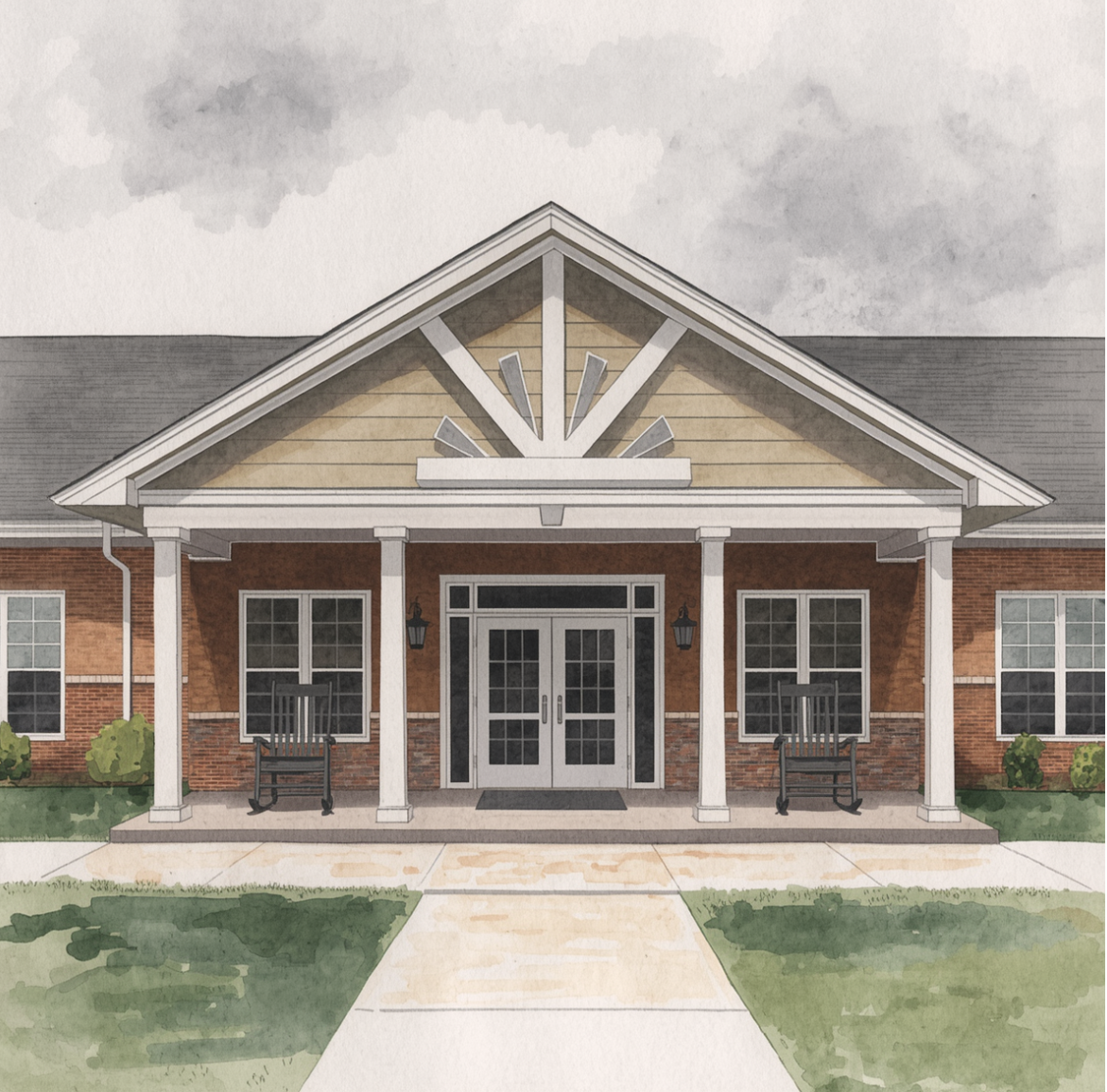
For many older adults, the phrase assisted living brings up an image that looks more like the nursing homes they remember from decades ago: shared rooms, hospital-like hallways, rigid schedules and very little independence.
But that may not be what assisted living looks like today. Before trying to convince Mom or Dad that they need to move, it can help to understand what they think you’re asking them to move to.
What does assisted living actually look like?
Assisted living is different from a skilled nursing facility or nursing home.
While every community is different, assisted living generally combines a private living space with meals, activities and access to help with certain daily needs.
Your parent may have their own apartment furnished with their own belongings. They may eat meals with other residents, participate in activities, have family visit, spend time outside or simply close their apartment door and enjoy some time alone.
Depending on the community and their needs, assistance may also be available with things like bathing, dressing or medications.
For someone picturing an institutional setting, actually seeing a modern assisted living community can be very different from what they expected.
The conversation may need to start somewhere else:
When families are worried about safety, medications, meals, falls or increasing care needs, it's understandable to want to jump straight to: “Mom, you need assisted living.”
But your parent may hear something very different:
“You can't take care of yourself anymore, and we're taking you out of your home.”
Instead, start with what matters to them.
Maybe staying close to their church, friends or family is important. Maybe Dad wants a place where he can still play cards. Maybe Mom wants a patio or outdoor space. Perhaps they want to bring a favorite chair, keep their normal morning routine or have enough room for the grandchildren to visit.
Those preferences aren't side issues. They can be the starting point for the search.
Instead of asking them to move, ask them to look at what assisted living looks like today.
Has your parent said, “I’m not moving to a home”?
I created a one-page guide you can share with Mom or Dad to help them see what assisted living can look like today.
Download the one-page guide.
You don't have to settle the entire assisted living question around the kitchen table.
Sometimes the next step is simply seeing what the options actually look like.
You might say:
“Mom, I know you’ve said you’re not moving to a home. I hear you. But I’m wondering if what you’re picturing is different from what some of these communities are actually like. What if we looked at a couple together? You can see the apartments, ask questions and tell me what you think.”
Then ask about her priorities.
- “What would be important to you if we looked?”
- “Is there an area of town you wouldn't want to leave?”
- “What would you want your apartment to have?”
- “Are there activities you'd actually enjoy?”
- “What would make a place feel comfortable to you?”
That changes the conversation from “Where are we putting Mom?” to “What would Mom want if she ever decided to make a change?”
Seeing it firsthand can change the conversation.
A brochure or website can only tell you so much.
Touring gives your parent a chance to walk into an apartment, see how residents spend their day, look at the dining room, ask about activities and get a feel for the community.
And they may still say, “This isn't for me.” That's useful information too.
The goal isn't to convince your parent that every assisted living community is wonderful. They aren't all the same, and the right fit depends on your parent's needs, preferences, budget and circumstances.The goal is to make the conversation about real options instead of an outdated picture of “a home.”
You don't have to navigate the conversation alone.
Sometimes these conversations are easier when the information comes from someone outside the family.
At TrueGuide Senior Advisors, I help Central Ohio families understand senior living options, identify what matters most to the older adult and explore communities that may fit their needs and preferences. That can start with a simple conversation about things like location, lifestyle, care needs and budget. From there, we can visit communities together so your parent can see firsthand what assisted living is actually like and form their own opinion.
Not sure how to start the conversation?
If you’re concerned about an aging parent but aren’t sure what the next step should be, let’s talk. We can discuss what’s happening, what matters to your family and whether exploring senior living communities makes sense.
Call today at (614) 383-9193
or
schedule a consultation.
Clear guidance. Confident decisions.