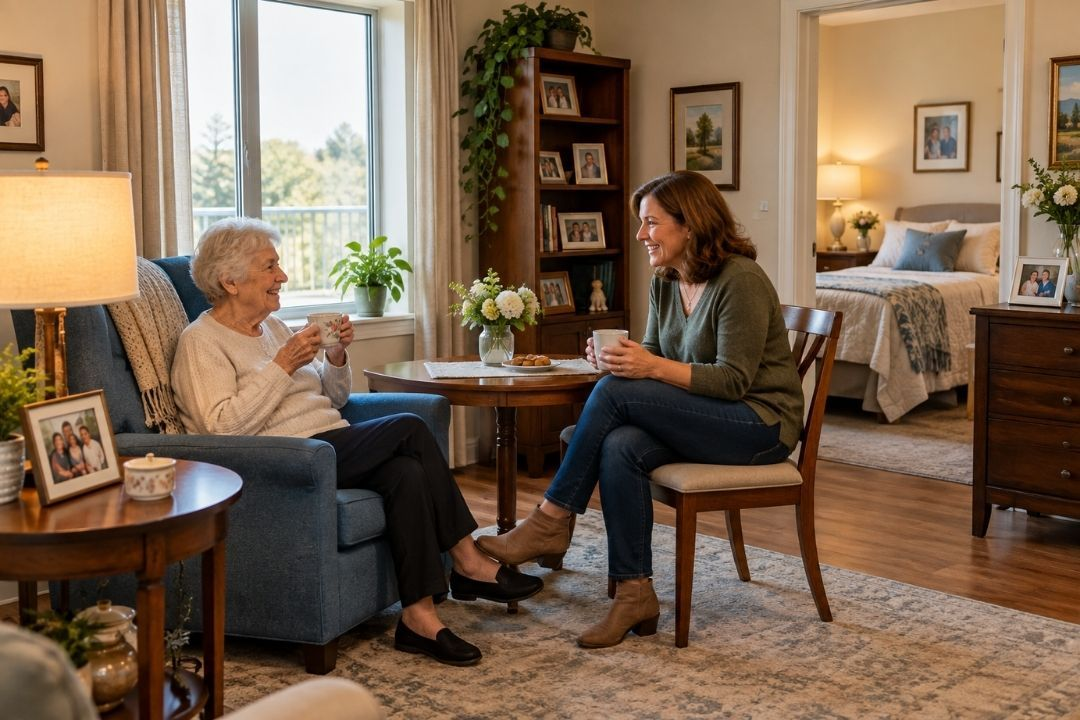
What If Mom Refuses Assisted Living?
One of the most common things families tell us is:
"We know Mom needs more support, but she refuses to consider assisted living."
If you're facing this situation, you're not alone.
Many older adults resist the idea of moving, even when family members are becoming increasingly concerned about safety, health, or quality of life. The thought of leaving a familiar home can feel overwhelming and may bring fears about losing independence, privacy, or control.
The good news is that resistance is common and it doesn't mean the conversation is over.
Why Parents Often Refuse Assisted Living
For many older adults, home represents much more than a place to live. It represents independence, memories, routines, and identity.
When families suggest assisted living, parents may hear:
- "You can't take care of yourself anymore."
- "We're taking away your independence."
- "You're losing control of your life."
Even when those messages aren't intended, they can be what your loved one hears.
Understanding these fears can help families approach the conversation with greater empathy and patience.
Avoid Turning It Into a One-Time Conversation
One of the biggest mistakes families make is treating the discussion as a single decision.
Instead of asking:
"Are you ready to move?"
Try asking:
- "How are things going at home?"
- "What feels more difficult than it used to?"
- "What worries you most about the future?"
- "What would help you feel safer or more supported?"
These questions often lead to more productive conversations than debating whether someone should move.
Focus on Goals, Not Buildings
Many families immediately begin talking about assisted living communities.
Instead, start with your loved one's goals.
For example:
- Staying safe
- Avoiding another hospitalization
- Reducing loneliness
- Managing medications
- Having help available when needed
Once you identify the goal, it becomes easier to discuss possible solutions.
Sometimes that solution is home care. Sometimes it's safety modifications. Sometimes it's assisted living. The important thing is finding the right level of support.
Listen for the Real Objection
When a parent says, "I'm not moving," there is often a deeper concern underneath.
Common fears include:
- Cost
- Losing independence
- Leaving pets behind
- Giving up a home they love
- Being isolated from family
- Fear of the unknown
Before offering solutions, take time to understand the concern driving the resistance.
Consider a Trial Visit
Many people reject assisted living based on assumptions rather than experience.
Touring a community, attending a social event, or joining a meal can help replace fear with information.
Some communities even offer short-term respite stays that allow older adults to experience community living before making a long-term decision.
Know When Safety Must Come First
While most situations benefit from patience and ongoing conversation, there are times
when safety concerns require more immediate action.
Examples may include:
- Frequent falls
- Wandering
- Medication mismanagement
- Unsafe driving
- Significant memory loss
- Repeated hospitalizations
When serious safety risks are present, families may need to work closely with healthcare providers and trusted professionals to determine the best next steps.
You're Not Alone
Helping a parent navigate these decisions can be emotionally exhausting.
Many families feel caught between respecting their loved one's wishes and protecting their safety.
The goal isn't to force a move. The goal is to understand your loved one's needs, explore available options, and make informed decisions together whenever possible.
At TrueGuide Senior Advisors, we help families throughout Central Ohio navigate these conversations, understand available care options, and determine the best next steps for their unique situation.
Not Sure What Comes Next?
If you're concerned about a parent but aren't sure whether they need home care, assisted living, memory care, or simply additional support, you're not alone.
Our free
Aging Parent Roadmap can help you better understand your loved one's current needs and identify possible next steps.